



Addis Ababa, Ethiopia – March 10, 2026
On the occasion of International Women’s Day, financial sector leaders, policymakers, and development partners gathered in Addis Ababa to discuss ways to strengthen women’s leadership and expand digital financial inclusion in Ethiopia. While women represent a significant share of the financial workforce, their presence in senior decision-making roles remains limited, highlighting the need for more deliberate policies and institutional commitment.
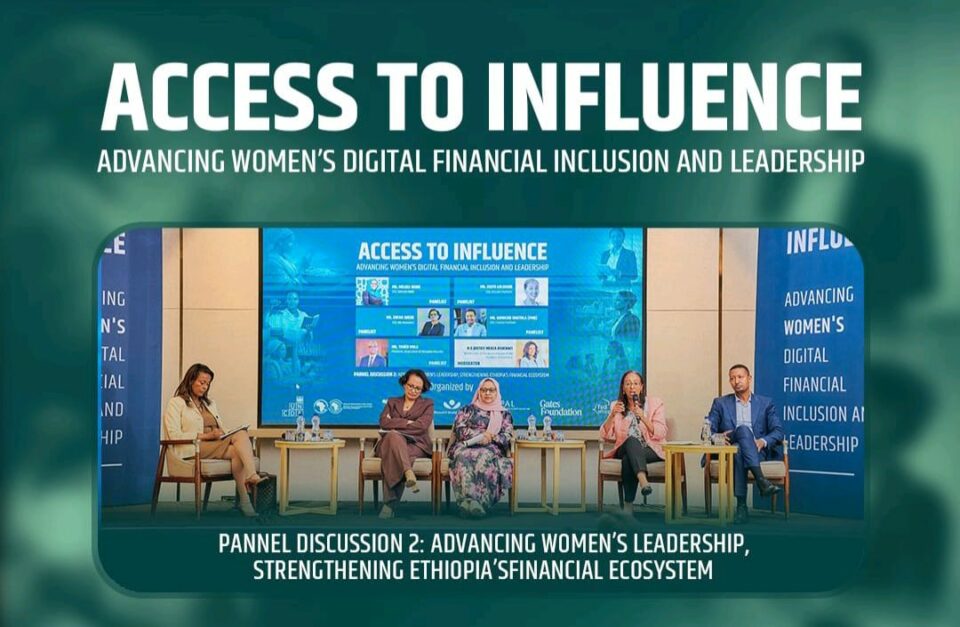
A high-level dialogue aimed at strengthening women’s leadership and digital financial inclusion in Ethiopia’s financial sector was held on March 10, 2026, at the Ethiopian Skylight Hotel in Addis Ababa, as part of national celebrations of International Women’s Day.
The event, organized by FSD Ethiopia, was conducted under the theme:
“Access to Influence: Advancing Women’s Digital Financial Inclusion and Leadership in the Financial Sector.”
The dialogue brought together financial sector leaders, policymakers, development partners, and experts to discuss ways of improving women’s participation in leadership positions and expanding their access to digital financial services.
During Panel Discussion 2, titled “Advancing Women’s Leadership, Strengthening Ethiopia’s Financial Ecosystem,” speakers emphasized that although women represent a significant portion of the financial sector workforce, they remain underrepresented in decision-making positions.
According to data shared during the event, women make up nearly 50 percent of the workforce in Ethiopia’s financial sector, yet only around 12 percent occupy senior leadership and executive roles.
Participants noted that this gap highlights the need for deliberate policies and strong institutional commitment to create clear pathways for women to advance into top management and boardroom positions.
In her opening remarks, Weynshet Zeberga, Chief Markets and Operations Officer at the National Bank of Ethiopia, stressed that women’s leadership and financial inclusion are key drivers of sustainable economic development in Ethiopia.
She acknowledged that Ethiopia has made encouraging progress in expanding digital financial services and digital payment systems, which are helping more people gain access to formal financial services.
However, she emphasized that the financial sector must move beyond viewing women merely as consumers of financial services.
Instead, she called for stronger efforts to ensure that women are actively involved as leaders and decision-makers, shaping financial regulations, designing financial products, and guiding the development of financial markets.
Weynshet Zeberga also highlighted several key areas that require attention in order to close the gender gap in financial access and leadership.
These include:
-
improving the availability and use of sex-disaggregated financial data,
-
strengthening digital literacy programs for women,
-
developing innovative financial products tailored to women’s needs.
She noted that solutions such as alternative collateral systems, flexible digital credit services, and inclusive financial technologies can help address persistent barriers that limit women’s ability to access finance, grow businesses, and participate fully in the economy.
Participants in the panel discussion also stressed the importance of building a more inclusive financial ecosystem, where institutions actively support women’s career advancement through mentorship programs, leadership training, and equitable recruitment and promotion practices.
They agreed that increasing women’s representation in leadership positions not only promotes gender equality but also strengthens the resilience, innovation, and sustainability of Ethiopia’s financial sector.
The event formed part of broader activities held across the country to commemorate International Women’s Day, which focuses on promoting gender equality, women’s empowerment, and inclusive economic development.
Organizers said the dialogue aimed to inspire concrete actions from financial institutions, regulators, and development partners, ensuring that women have greater access, influence, and leadership opportunities within Ethiopia’s rapidly evolving financial landscape.
Yonas Martin Z. Lut: International Correspondent
Addis Ababa, Ethiopia
