

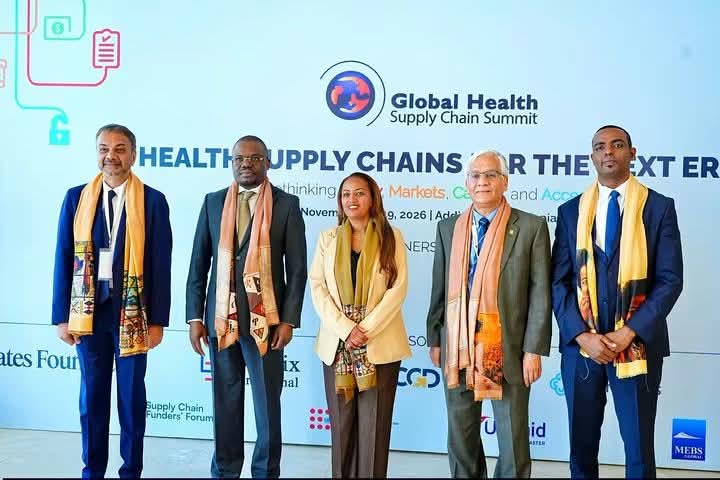


ADDIS ABABA, ETHIOPIA — 18 November 2026
Who finances Africa’s health systems? Who produces the medicines, who buys them, and who gets them to the last clinic? These questions are at the heart of the 2026 Global Health Supply Chain Summit (GHSCS), taking place from 17 to 19 November in Ethiopia’s capital. Behind the discussions on stock levels, procurement and logistics lies a question of sovereignty. How much control do African countries have over their ability to keep essential health services running?
The summit brings together public health leaders, policymakers, development partners, and professionals from the pharmaceutical and logistics sectors. Speakers include Ethiopia’s Minister of Health, Dr Mekdes Daba Feyssa, and Africa CDC Director-General Dr Jean Kaseya.
Financing health means setting its priorities
For decades, international aid has helped expand access to healthcare across Africa. As donor priorities shift, African governments face renewed pressure to mobilise domestic funding and take greater responsibility for their health systems. When external funding shifts, how can countries keep essential supplies flowing?
Discussions in Addis Ababa focus on domestic financing, stronger public institutions and partnerships that can secure procurement and distribution. For a continent with a growing population, the stakes are practical: uninterrupted access to essential medicines, vaccines, reproductive health commodities and other life-saving products.
From the national warehouse to the last clinic
A medicine can be in stock at a central warehouse and still be unavailable at a local clinic. That is where real-time data, digital tracking and artificial intelligence can make a difference. Better demand forecasts can help health teams spot potential shortages early and adjust deliveries, including to the most remote facilities.
A dedicated session brings technology innovators and industry experts together to examine practical uses of AI in African health supply chains, from forecasting demand to tracking pharmaceutical products on the ground.

Don’t wait! Download JAPAP Messenger on Google Play
or sign up for free today.
Manufacturing locally and buying regionally
Local pharmaceutical manufacturing, regional procurement, streamlined customs procedures and trade facilitation are also on the agenda. The summit examines how public-private partnerships and workforce training can strengthen the teams and institutions that keep supply chains running.
Experiences from Ethiopia, Rwanda, Kenya, Nigeria and Tanzania offer a chance to compare approaches, identify where reforms are needed and see which solutions can be adapted across borders. The World Health Organization, Africa CDC, UNICEF, UNFPA and the Center for Global Development are taking part alongside pharmaceutical and logistics stakeholders.
A question of political responsibility
By hosting the summit, Addis Ababa provides a forum for African countries to bring their priorities into dialogue with global expertise. The discussion reaches into economic resilience, the accountability of public institutions and the ability of African governments to work together on shared needs.
Health sovereignty will be measured by whether African countries can finance, produce, procure and distribute essential health products and sustain care over time. The test is whether decisions made in ministries, factories and procurement offices translate into reliable care at the last clinic.
By Eyob Salemot, International Correspondent
