

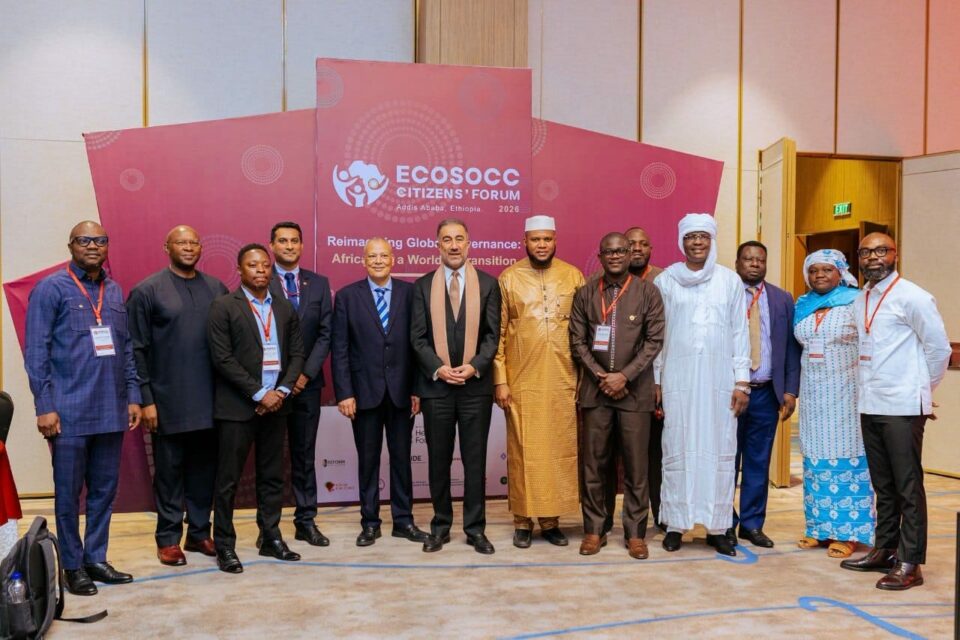


From reparative justice and human rights to youth empowerment and global governance reform, African leaders, civil society, and policymakers gathered in Addis Ababa with one clear message: Africa is no longer asking for a voice—it is claiming its rightful place in shaping the future of the world.
By the RussAfrik Info Editorial Team
Addis Ababa, Ethiopia
Africa’s future will not be written by others.
That was the dominant message that emerged from the ECOSOCC Citizens’ Forum 2026, where government officials, African Union institutions, diplomats, researchers, civil society organizations, and international development partners met in Addis Ababa to discuss the continent’s role in addressing the world’s most pressing political, economic, and social challenges.
Over two days of intensive discussions, participants agreed that Africa must move beyond simply participating in international debates and become a decisive actor in shaping global governance for the twenty-first century.
Reparative Justice Takes Center Stage
One of the Forum’s most significant sessions focused on reparative justice for Africans and people of African descent.
Participants revisited the historical consequences of slavery, colonialism, and systemic discrimination while examining practical pathways toward recognition, restitution, reconciliation, and stronger international cooperation.
Speakers emphasized that discussions surrounding reparative justice are gaining unprecedented momentum within both the African Union and the wider international community.
For many participants, the objective is not merely financial compensation but historical recognition, institutional reforms, and a more equitable international relationship between Africa and former colonial powers.
Strengthening Human Rights Institutions
Human rights and democratic accountability were equally central to the Forum.
A special solidarity session commemorated the 20th anniversary of the African Court on Human and Peoples’ Rights, reaffirming the Court’s critical role in protecting the rights of African citizens.
Participants stressed that continental human rights institutions must receive stronger political support while citizens should become more aware of the legal mechanisms available to defend their rights.
Civil society organizations were also encouraged to expand advocacy efforts, improve access to justice, and reinforce democratic accountability throughout the continent.
A Truly Continental Dialogue
The Forum brought together an impressive diversity of participants.
- Ambassadors.
- Government ministers.
- African Union Commissioners.
- Regional organizations.
- International development partners.
- Civil society leaders.
- Academic researchers.
- Policy specialists.
Representatives from numerous African countries and international institutions all contributed to the discussions.
Their participation reflected a growing understanding that today’s global challenges—from governance and security to economic transformation and climate resilience—cannot be addressed through isolated national approaches.
Instead, they require coordinated, inclusive, and citizen-centered solutions.
Africa’s Greatest Resource: Its Youth
Throughout the conference, one message was repeated consistently:
Africa’s youthful population remains one of the continent’s greatest strategic advantages.
Participants argued that sustainable development will largely depend on empowering young people to become active contributors to Africa’s transformation.
Women’s leadership also received significant attention, alongside digital innovation, entrepreneurship, civic participation, and inclusive governance.
According to speakers, these pillars will determine whether Africa successfully transforms its demographic growth into long-term economic prosperity.
A Blueprint for Future African Policies
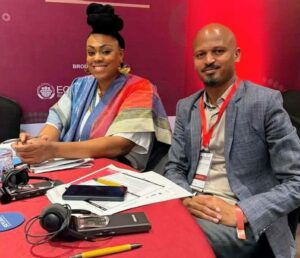
The Forum concluded with the presentation and adoption of the ECF26 Outcome Document, a comprehensive policy framework containing recommendations developed during plenary discussions and thematic sessions.
Organizers expect this document to influence future African Union policy deliberations while also contributing to ongoing international conversations regarding the reform of global governance institutions.
Rather than remaining a simple conference declaration, the Outcome Document is intended to serve as a practical roadmap for future continental action.
International Partners Supporting Democratic Governance
The ECOSOCC Citizens’ Forum 2026 received support from several international organizations committed to strengthening democratic governance and citizen participation across Africa.
Among them were:
- The William and Flora Hewlett Foundation
- TrustAfrica
- INCLUDE Knowledge Platform
- KAICIID
- Reform Initiatives
- along with several other international partners working to promote inclusive governance across the continent.
Their involvement reflects growing international recognition that African civil society plays an increasingly important role in shaping the continent’s future.
📱 ADVERTISEMENT | JAPAP – Africa’s Super Mobile App!
Messaging, social networking, crowdfunding, and artificial intelligence—all in one application, designed by Africans for Africa.
👉 Download JAPAP Messenger:
https://japapmessenger.com/r/FX3R2FJ2
Africa Wants to Shape the World—Not Simply Observe It
As delegates departed Addis Ababa, the overall message of the Forum remained unmistakable.
Africa no longer wishes to be a passive participant in discussions concerning global governance.
It intends to become one of the architects of the international order.
Through stronger continental institutions, empowered citizens, innovative public policies, democratic participation, and deeper regional cooperation, African leaders and civil society believe the continent can significantly influence how the world’s major challenges are addressed in the decades ahead.
- The vision presented in Addis Ababa is ambitious.
- It is an Africa that speaks with greater confidence.
- An Africa that relies on its own institutions.
- An Africa that contributes ideas—not merely requests assistance.
- And above all, an Africa determined to ensure that its voice carries equal weight in building a fairer and more balanced international system.
About ECOSOCC
The Economic, Social and Cultural Council (ECOSOCC) is an advisory organ of the African Union established to provide African civil society organizations and citizens with a formal platform to contribute to the formulation, implementation, and monitoring of African Union policies and programmes.
It serves as the institutional bridge between the African Union and the people of Africa, promoting participatory governance, democratic accountability, and inclusive development.
📲 RUSSAFRIK INFO on WhatsApp
Receive our exclusive daily analyses on economics, sports, geopolitics, and African affairs.
👉 https://whatsapp.com/channel/0029VbDZJyx7NoZtPPo2gw3u
