

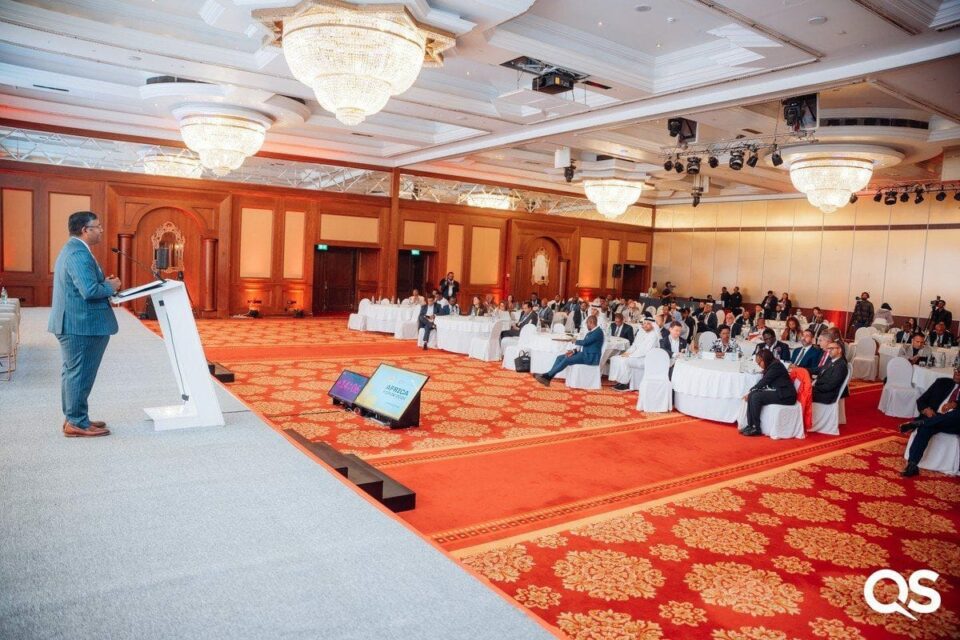


Artificial intelligence, university funding, academic partnerships, and global talent mobility dominated discussions on the final day of the QS Africa Forum 2026. Bringing together university leaders, policymakers, and education experts, the forum concluded with a shared call for stronger collaboration to build more resilient, innovative, and future-ready higher education institutions across Africa.
The final day of the QS Africa Forum 2026 continued with a high-level session on building institutional capacity, where university leaders openly addressed the pressing challenges facing higher education across the continent. Discussions focused on persistent funding shortages, ageing infrastructure, and the growing need for more agile governance models capable of responding to rapidly changing educational and economic realities.
This was followed by a session on partnerships for impact, highlighting the strategic importance of cross-border academic collaboration. Speakers emphasized that stronger partnerships among African universities, as well as between African and Arab institutions, are essential to increasing research output, strengthening innovation, and expanding opportunities for student and faculty exchanges.
JAPAP Introduces AI-Powered Social Networking: What It Is and Why It Matters for Africa
A spirited debate on global talent mobility
One of the most anticipated moments of the forum came during the headline debate:
“Global Mobility Delivers Net Benefits for Africa.”
The discussion tackled one of the continent’s most complex policy questions: does international mobility strengthen Africa or weaken it?
Two opposing perspectives emerged.
One side argued that the emigration of highly skilled graduates continues to deprive African countries of critical human capital, slowing economic development and weakening national institutions.
The opposing side maintained that Africa’s diaspora, international professional networks, remittances, and the return of experienced professionals ultimately generate innovation, strengthen local expertise, and accelerate the continent’s integration into the global economy.
The lively debate drew significant audience participation, illustrating the complexity of designing effective policies to retain talent while maximizing the benefits of global mobility.
Following the debate, delegates attended the closing keynote address and the official closing ceremony in the main plenary hall before gathering for a final networking lunch, bringing the 2026 edition of the forum to a close.
A call for unity and strategic leadership
Addressing participants, H.E. Zaki Anwar Nusseibeh, Cultural Advisor to the President of the United Arab Emirates and Chancellor of the United Arab Emirates University (UAEU), delivered a strong appeal for greater international cooperation.
“The challenges facing the UAE, the region, Africa, and the world cannot be solved by one university, one country, or one continent alone. That is precisely why this forum is so important.”
He also stressed that universities now carry a renewed responsibility to provide leadership grounded in clarity of purpose, ethical responsibility, and strategic foresight, qualities he described as essential for navigating an increasingly interconnected and rapidly evolving world.
Turning dialogue into action
As the forum officially concluded, organizers reaffirmed their commitment to ensuring that the recommendations and commitments made during the event translate into concrete action.
Priority areas identified include the integration of artificial intelligence into higher education, the development of sustainable university infrastructure, and the expansion of joint Africa–Arab research funding initiatives.
A follow-up report is expected later this year to assess progress made on the forum’s key commitments and recommendations.
With the successful conclusion of its 2026 edition, the QS Africa Forum has further strengthened its position as one of the continent’s leading platforms for shaping the future of higher education. More than an annual conference, it has become a strategic meeting point where collaboration, innovation, and shared vision are helping define the next chapter of Africa’s academic and research landscape.
Eyob Salemot
International Correspondent
